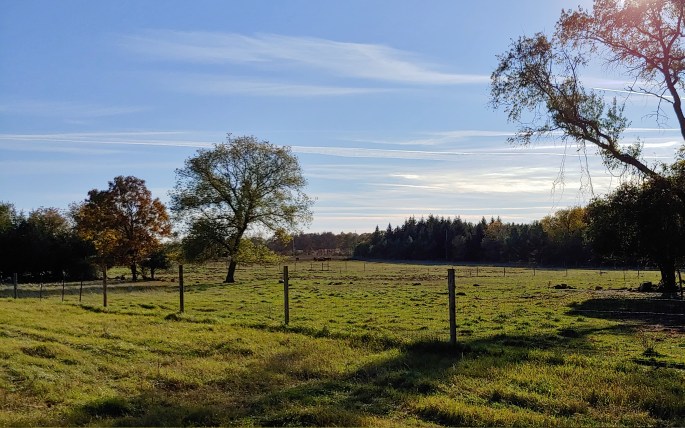
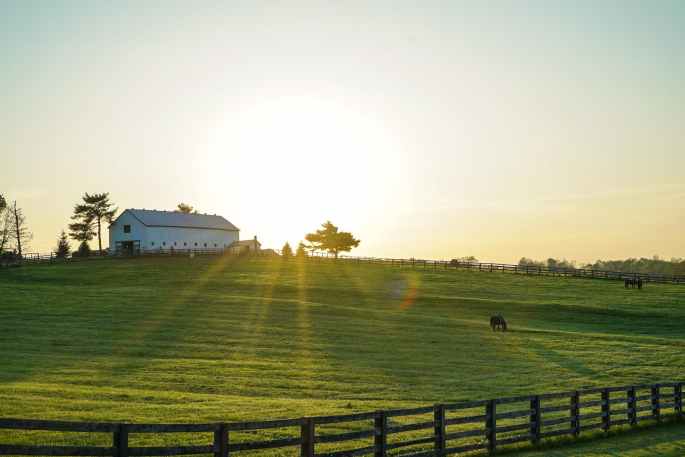
Photo by James Wheeler on Pexels.com A farm is a farm is a farm, right? This comes up a lot in discussions about our project. As people become more urbanized, their only connection to agriculture is often a grandparent's farm that they visited during their childhood summers. "My grandfather used to say that once in … Continue reading What is regenerative farming anyway?
Blog
Farming with Positive Uncertainty
This weekend, I had the honor of meeting Dr. Temple Grandin, the world-renowned animal behaviorist, and hearing her speak in Stevens Point, WI. "Temple Grandin at TED" by Steve Jurvetson from Menlo Park, USA is licensed under CC BY 2.0. She spoke on topics from visual thinking to livestock behavior to the importance of good breeding, and then … Continue reading Farming with Positive Uncertainty
Why you should begin planning your farm transition today
It's overwhelming. It's complicated. It's emotional. Controversial even. You're too busy. You're never going to retire. None of your kids want to farm anyway. Any of this sound familiar? There's a mountain of reasons why you may be putting off writing your farm transition plan. These numbers say you're not alone: Only about 33% of … Continue reading Why you should begin planning your farm transition today
Leasing farmland to a beginning regenerative farmer
Do you have farmland that you would like managed according to your land stewardship goals? Maybe you: are a farmer hoping to pass on the management of your land are a widow/widower of a farmer inherited a family farm purchased a farm or recreational land that could be farmed, but do not farm yourself bought … Continue reading Leasing farmland to a beginning regenerative farmer
Wonder, magic, diamonds: the treasures of (farm)land conservation
Our neighboring town of Ripon is home to South Woods, a 55-acre woodland preserved since 1902 - making it Wisconsin's oldest nature preserve - by a group of forward-thinking women who wanted to make a difference and save this special place from logging. The story is now also preserved in a beautiful short film. When … Continue reading Wonder, magic, diamonds: the treasures of (farm)land conservation
Renewable energy vs. regenerative agriculture: can we do both?
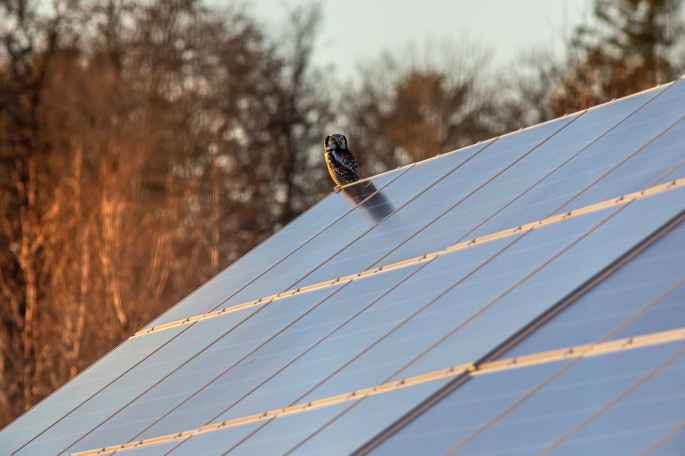
With climate extremes increasing in frequency and intensity, two mitigation methods regularly emerge - conversion to renewable energy and expanding regenerative agriculture. Both have their benefits. The problem is, they are increasingly competing for the same land. Wind and solar energy are now cheaper than fossil fuel. So project developers are eager to expand, and … Continue reading Renewable energy vs. regenerative agriculture: can we do both?
Why regenerative
"Of the many epic challenges that climate change is bringing to humankind, one of the most significant is surely the need to reinvent agriculture.
Can the world’s farmers find a way to shift from large-scale, carbon-intensive industrial farming that is destroying soil and ecosystems to smaller-scale bioregional systems that not only respect nature but regenerate it?
Can we invent systems that grow enough nutritious food, distribute it fairly to all, and remake agriculture as a decentralized, place-respecting enterprise?
At this point in the unfolding climate catastrophe, these ambitions are not simply a nice fantasy to ponder. They are existential necessities. If humankind is going to avoid fatal disruptions to the planet’s ecosystems and civilization itself, agriculture must find ways to pursue some radical shifts.
In the short term, the top imperative must be new strategies for adapting to climate change: new cultivation practices, new crop choices, holistic commitments. Over the longer term, the art of farming must reintegrate itself with local ecosystems and the biosphere. Agriculture must do more than “sustain” an already degraded landscape. It must understand and improve the generativity of life itself.
Regeneration is not simply a set of techniques. It is a mindset and worldview. It is a deep priority and commitment. Regenerative agriculture is not only about improving crop yields and reducing harmful ecological impacts. It is about bringing new vigor to biogeoecological systems while enlivening us as humans.
The focus is not on beggar-thy-neighbor competition and market success that tends toward economic consolidation; it is about cooperative stewardship of dispersed, autonomous systems on a holistic scale. Everyone can flourish together."
Successful farmland transitions that benefit both current and future farmers
A topic near and dear to FoxRAP's heart. UW Extension published a helpful 3-part article series: Demystifying the future farmer and planning ahead for a successful farmland transition. Key takeaways from Part 1 - Making farmland transition options available to landowners: Our current producers are aging out and an expected 70% of farmland will change … Continue reading Successful farmland transitions that benefit both current and future farmers
Celebrating Sconnie: Instilling an inclusive love of place
Although I've studied Spanish (on and off, ahem) since high school, only this year did I learn the powerful word, querencia. From the word querer, which means 'to want' or 'to love', querencia translates as 'fondness'. However, it's also a deeper concept, one with no English translation; a concept of belonging, a love of home, … Continue reading Celebrating Sconnie: Instilling an inclusive love of place
MN grant program helps young farmers buy land
Minnesota launched what may be the nation's first-of-its-kind program to bring in a new, diverse generation of farmers as the current, 99%-white farmer population grows older. This $15,000 matching grant opened at 9:00 a.m. on January 4, 2023 and had 28 applications in the first five minutes. Within days, the funds were claimed, applications closed, … Continue reading MN grant program helps young farmers buy land